Manufacturing is undergoing a fundamental change. Traditional production environments are increasingly being connected, automated and supported by data, giving manufacturers greater visibility into what happens on the factory floor. A smart factory brings these capabilities together so that people, machines and digital systems can work as part of a more coordinated production environment. The goal is not simply to introduce more technology, but to use it in ways that improve productivity, quality, flexibility and resource efficiency.
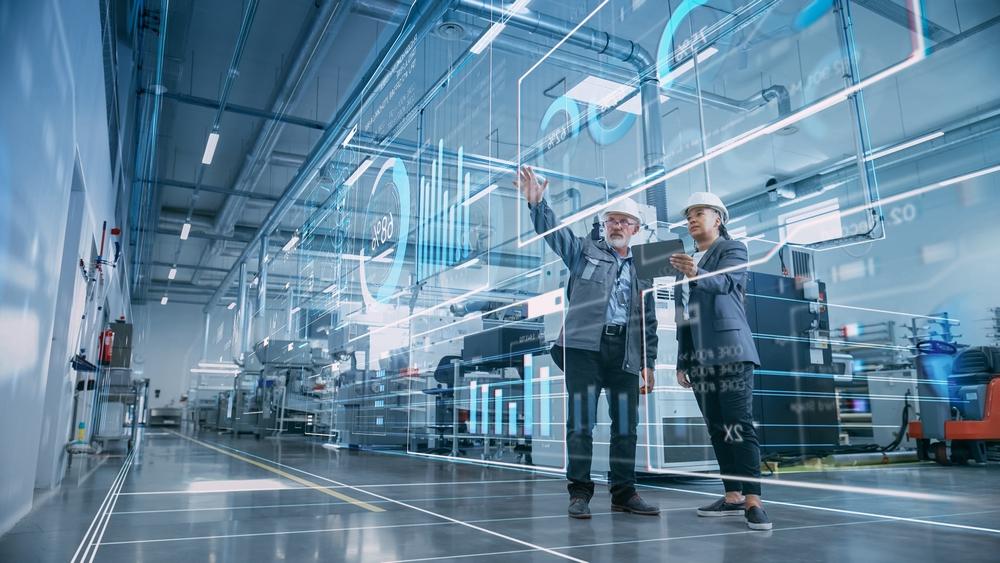
Build productivity around connected production
A productive smart factory depends on more than individual machines performing their tasks efficiently. The real value appears when equipment, production stations and software can communicate with each other and provide useful information about the manufacturing process. Companies such as Atlas Copco are developing smart factory approaches that combine connected tools, automation, software and services to support this transition.
Connectivity makes it possible to understand production in far greater detail. Instead of waiting for a problem to become visible through rejected products, downtime or missed targets, manufacturers can collect information directly from their processes. Production data can show whether an operation has been completed correctly, whether equipment is performing as expected and where bottlenecks are beginning to appear.
This creates opportunities to react earlier. When information moves through the factory in real time, production teams can identify deviations before they develop into larger problems. Decisions that once depended on manual checks or retrospective reports can increasingly be based on current production conditions.
That visibility can also make continuous improvement more effective. Manufacturers have always worked to optimise cycle times, reduce downtime and improve throughput, but connected production provides a stronger factual basis for those decisions. Instead of relying primarily on assumptions, teams can compare performance across stations, shifts or production lines and focus improvement work where it is most valuable.
A smart factory therefore changes the role of data. It is no longer simply something collected for reporting purposes. Used effectively, production data becomes an operational resource that helps people understand what is happening, why it is happening and what can be improved.
Combine automation with human expertise
Automation is one of the most visible features of modern manufacturing, but a smart factory should not be understood as a factory without people. In many production environments, the strongest results come from combining automation with human knowledge and judgement.
Repetitive operations can often be automated or digitally controlled, while operators focus on tasks that require flexibility, decision-making or experience. This can create a more consistent production process while also supporting employees in their daily work.
Controlled and automated workstations can help ensure that production steps are carried out in the correct sequence. Digital systems can provide operators with instructions, verify completed operations and alert them when something differs from the expected process. In assembly environments, this can be particularly valuable where many individual operations must be performed correctly before a finished product can move forward.
The result can be greater process consistency without removing the operator from the equation. Instead, technology can provide additional support, helping employees perform complex tasks accurately while reducing unnecessary manual checks.
Ergonomics is another important consideration. Productivity should not be achieved by simply increasing the physical demands placed on operators. Modern production equipment and intelligent tools can be designed around the people using them, helping manufacturers create working environments that are both efficient and operator-friendly.
This becomes particularly important as production grows more complex. Factories may need to manufacture several product variants on the same line, adapt quickly to changing volumes or introduce new models without extensive restructuring. Employees remain central to that flexibility, while digital systems give them better information and more consistent process support.
The smartest production environments therefore use automation selectively. They automate where automation improves the process and use human expertise where it creates the greatest value.
Turn production data into better decisions
Collecting data is relatively easy compared with using it effectively. A factory can generate enormous quantities of information from tools, controllers, sensors and production systems, but that information only creates value when it helps someone make a better decision.
A productive smart factory needs to transform raw production data into practical insights.
At the individual workstation, this might mean confirming that an assembly operation has been completed within defined parameters. At production-line level, it could mean identifying recurring quality deviations or understanding why one section of the line is creating delays. Across the entire factory, connected data can provide a broader picture of production performance and resource utilisation.
Traceability is an important part of this environment. When production information can be connected to specific operations or products, manufacturers gain greater visibility into how a product was assembled. If a quality problem occurs, it becomes easier to understand where the issue originated and which products may have been affected.
This can reduce the need for broad corrective actions. Rather than treating an entire production batch as potentially problematic, manufacturers may be able to isolate the relevant process, component or time period more precisely.
Data can also support preventive work. Patterns in production performance may reveal that a process is gradually moving away from its expected behaviour. Recognising those patterns early gives production teams an opportunity to investigate before the deviation causes significant downtime or quality problems.
The same principle applies to line balancing. When manufacturers understand cycle times and production flow in detail, they can identify stations that consistently restrict capacity. Adjusting workloads, production sequences or equipment can then be based on measured conditions rather than assumptions.
Smart manufacturing is therefore not simply about generating dashboards. The objective is to make useful information available to the people who can act on it.
Improve flexibility while reducing waste
Modern manufacturers operate in markets where demand can change quickly. Customers expect greater product variety, production volumes may fluctuate and new products need to reach the market faster. Production systems built around a single fixed configuration can struggle to respond efficiently to those changes.
Smart factories are designed with greater adaptability in mind.
Connected tools and digitally controlled processes can make it easier to change production settings when moving between products. Instructions can be updated digitally, production parameters can be adapted and relevant information can follow the product through the manufacturing process.
This flexibility can be particularly valuable in mixed-model production, where several product variants are manufactured on the same line. Instead of relying entirely on operators to remember different procedures, connected systems can help guide each operation according to the product being assembled.
Greater process control can also contribute to lower material waste. Errors that are discovered late in production can be expensive because significant time, energy and materials may already have been invested in the product. Detecting deviations earlier can reduce rework and prevent defective components from continuing unnecessarily through the production process.
Energy efficiency can benefit from the same principle of visibility. When manufacturers understand how equipment and processes are being used, they have a better foundation for identifying unnecessary consumption and evaluating where changes could improve efficiency.
Reducing waste and improving productivity are often closely connected. A factory that uses fewer materials for rework, avoids unnecessary downtime and makes better use of its equipment is generally operating more efficiently overall.
This is one reason sustainability and productivity do not have to be competing objectives. Better process control can support both. Using materials, equipment and energy more effectively can reduce environmental impact while simultaneously strengthening manufacturing performance.
Develop the smart factory step by step
Transforming an existing manufacturing operation does not necessarily require replacing everything at once. In many cases, a gradual approach is more practical.
A manufacturer might begin with one assembly process where improved control would create immediate value. Connected tools could then provide better traceability and process information. The next stage might involve digitally controlling individual workstations, introducing automation to suitable operations or connecting several stations so that production information can move across the line.
Over time, those individual improvements can become part of a broader connected production system.
Taking a staged approach also gives manufacturers an opportunity to evaluate results before expanding. A technology should solve a real production problem rather than being introduced simply because it is available. Clear objectives make it easier to determine whether an investment has improved quality, productivity, flexibility or resource efficiency.
Integration becomes increasingly important as the smart factory develops. Individual digital solutions can provide value, but isolated systems may create new complexity if information cannot move between them. Using compatible technologies, common data structures and established communication standards can make future expansion easier.
Manufacturers should also consider how new systems fit into existing processes. Smart factory projects work best when technology supports production rather than forcing unnecessary complexity onto employees. Operators, production engineers, maintenance teams and quality personnel all bring valuable knowledge about how manufacturing actually works. Their experience can help identify where digitalisation will make the greatest difference.
The most productive smart factory is therefore not necessarily the factory with the largest number of connected devices or the highest level of automation. It is the one where technology, data and people work together effectively.
When connectivity provides better visibility, automation improves consistency and operators receive better support, manufacturing becomes easier to understand and optimise. Small improvements can then build on one another, creating production environments that are more flexible, more resource-efficient and better prepared for changing requirements.
Smart manufacturing is ultimately about creating a factory that can learn from its own production processes. With the right combination of connected equipment, useful data, automation and human expertise, manufacturers can move beyond isolated efficiency improvements and create a production system that continuously provides opportunities to work smarter.